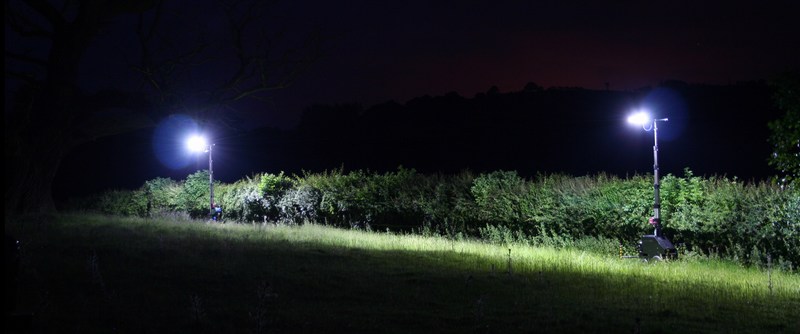
 This project was conducted during 2008. We used an experimental approach to test the impact of HPS lights on bat commuting behaviour along hedgerows
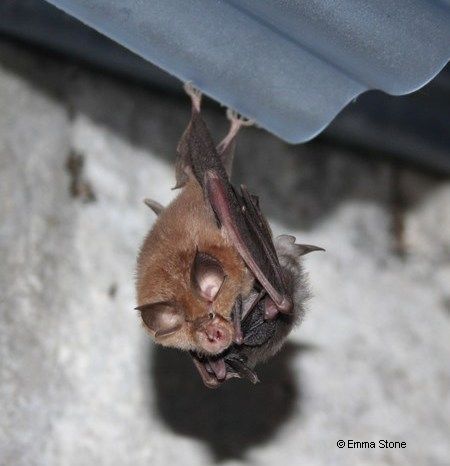
within the vicinity of lesser horseshoe bat (Rhinolophus hipposideros) roosts. Lesser horseshoe bats use hedgerows and other linear
landscape features as commuting routes to travel through the landscape to reach foraging areas. Connectivity of such features within the
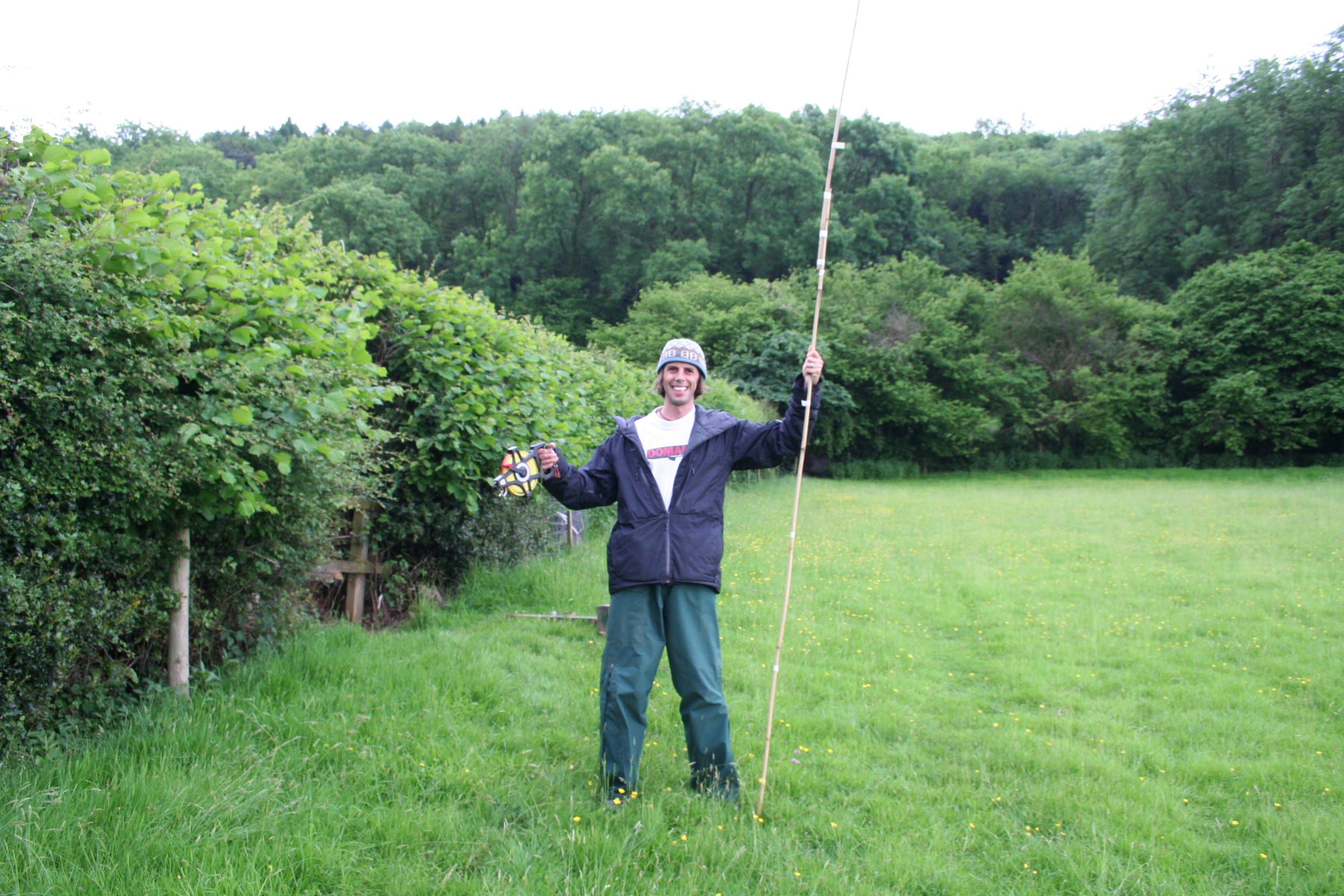
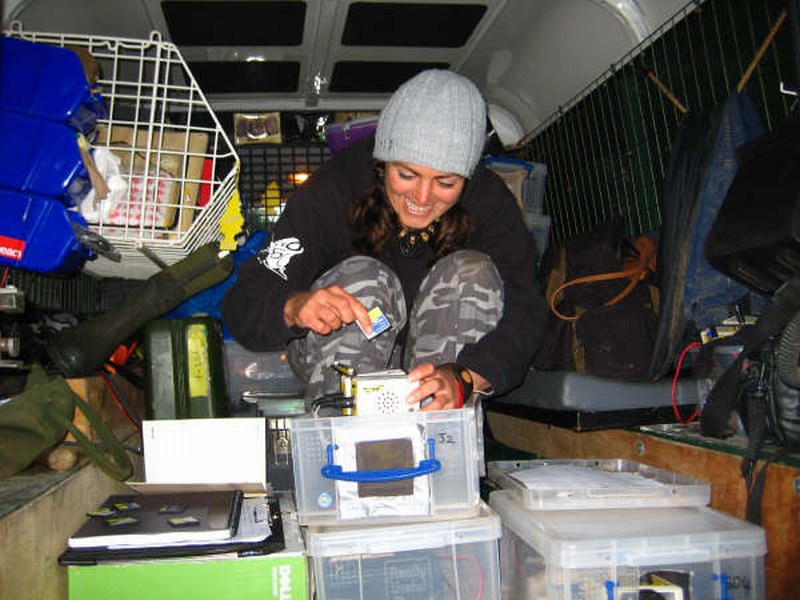
landscape is therefore important for this species. Flight paths awere identified using AnaBat II and SD1 ultrasonic detectors
(Titley Electronics, Ballina, New South Wales, Australia) which record relative bat activity and species diversity. Hedges were then illuminated
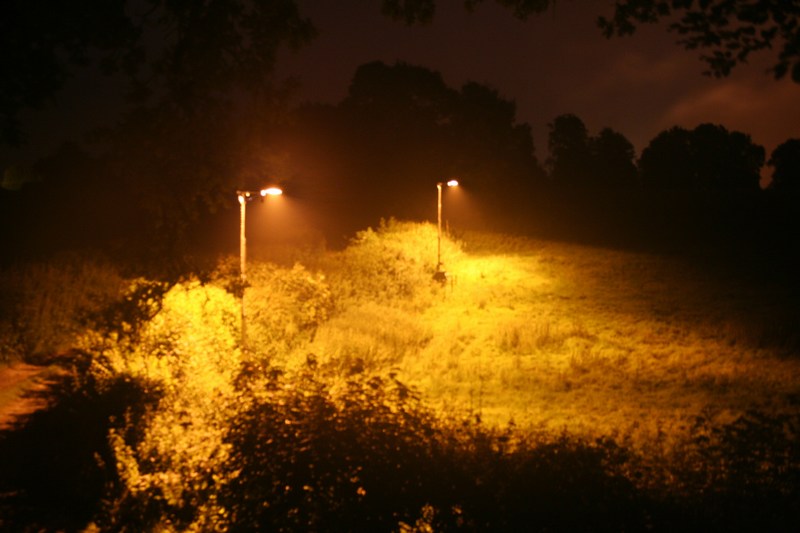
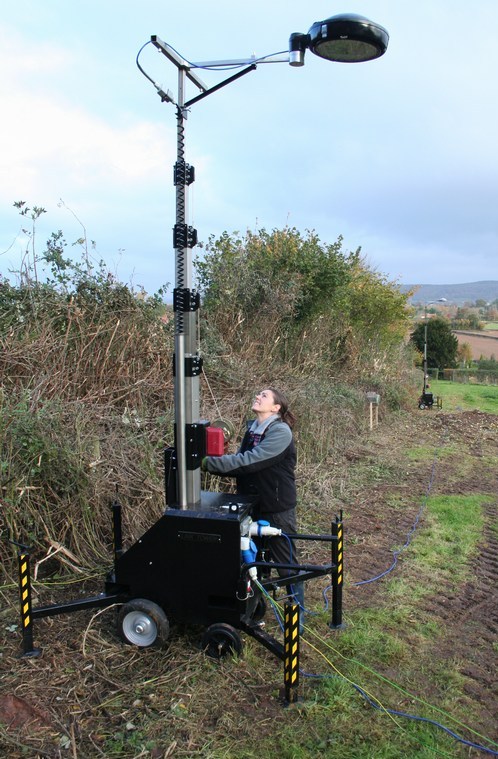
using two portable street lights to test for changes in species diversity and activity before and after illumination.Our street lights have been
obtained under guidance from the Institution for Lighting Professionals (ILP) to ensure that they closely
match those used on the streets.
We found that HPS lights caused a significant reduction in the commuting activity of lesser horseshoe bats, causing avoidance behaviour.
The results of this study were published in Current Biology (2009). You can find a link to the
paper on our publications page.
This project was conducted during 2008. We used an experimental approach to test the impact of HPS lights on bat commuting behaviour along hedgerows
within the vicinity of lesser horseshoe bat (Rhinolophus hipposideros) roosts. Lesser horseshoe bats use hedgerows and other linear
landscape features as commuting routes to travel through the landscape to reach foraging areas. Connectivity of such features within the
landscape is therefore important for this species. Flight paths awere identified using AnaBat II and SD1 ultrasonic detectors
(Titley Electronics, Ballina, New South Wales, Australia) which record relative bat activity and species diversity. Hedges were then illuminated
using two portable street lights to test for changes in species diversity and activity before and after illumination.Our street lights have been
obtained under guidance from the Institution for Lighting Professionals (ILP) to ensure that they closely
match those used on the streets.
We found that HPS lights caused a significant reduction in the commuting activity of lesser horseshoe bats, causing avoidance behaviour.
The results of this study were published in Current Biology (2009). You can find a link to the
paper on our publications page.
 The main focus of the project
is to determine the impact of light pollution from street lighting
on bats. We work on a range of bat species and assess the impacts
on bat foraging and commuting behaviour. We use both an
experimental and observational approach
working in close collaboration with the
Institution for Lighting Professionals (ILP) and local county councils.
Have a look at our key projects below.
The main focus of the project
is to determine the impact of light pollution from street lighting
on bats. We work on a range of bat species and assess the impacts
on bat foraging and commuting behaviour. We use both an
experimental and observational approach
working in close collaboration with the
Institution for Lighting Professionals (ILP) and local county councils.
Have a look at our key projects below.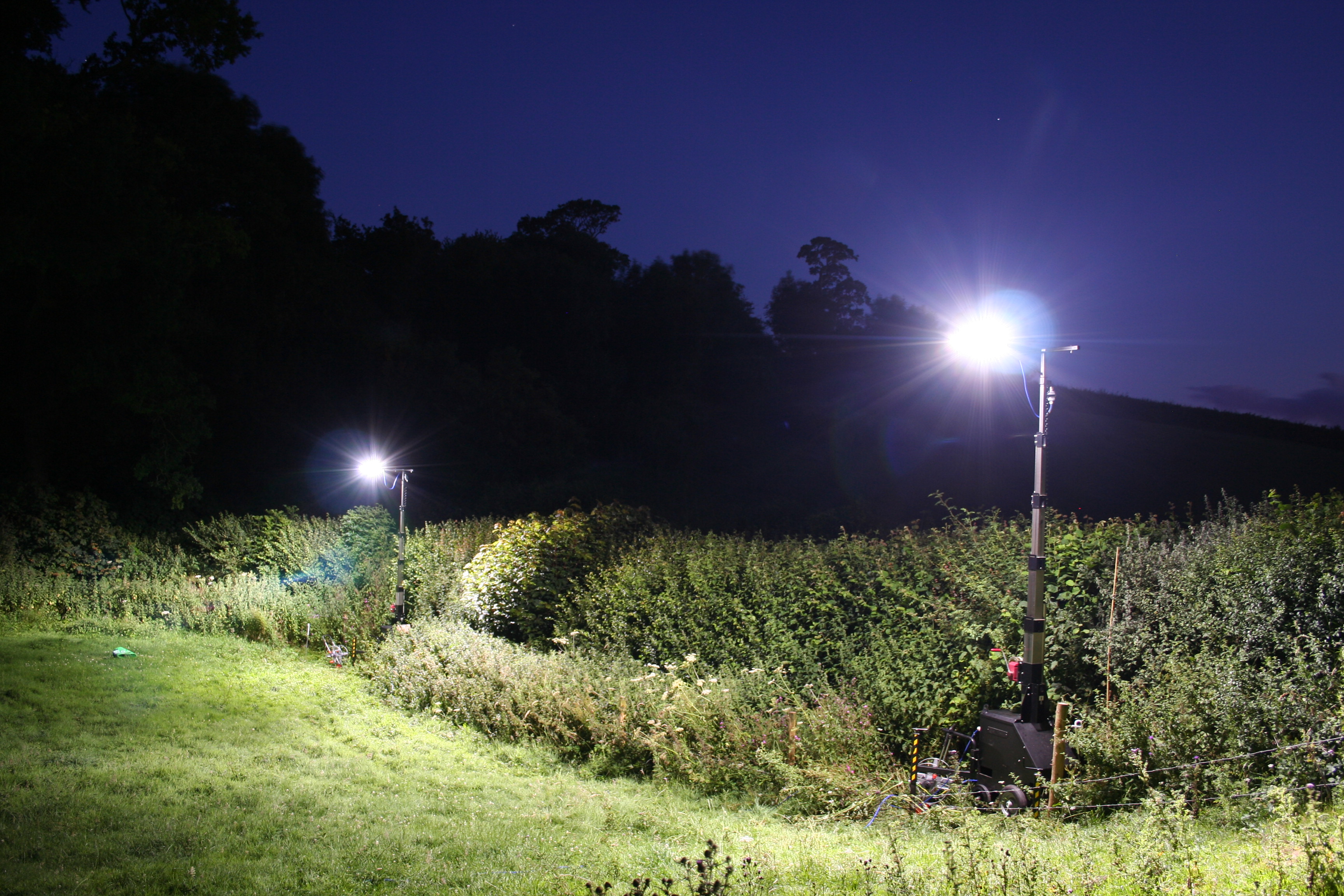 This project was conducted during 2009. Useing the same experimental approach as for the HPS experiments we tested the impact of LED lights on
bat commuting behaviour along hedgerows within the vicinity of lesser horseshoe bat (Rhinolophus hipposideros) roosts.
Hedges were illuminated using two portable Monaro LED street lights to test for changes in species diversity and activity before and after
illumination.Our street lights were obtained from
This project was conducted during 2009. Useing the same experimental approach as for the HPS experiments we tested the impact of LED lights on
bat commuting behaviour along hedgerows within the vicinity of lesser horseshoe bat (Rhinolophus hipposideros) roosts.
Hedges were illuminated using two portable Monaro LED street lights to test for changes in species diversity and activity before and after
illumination.Our street lights were obtained from 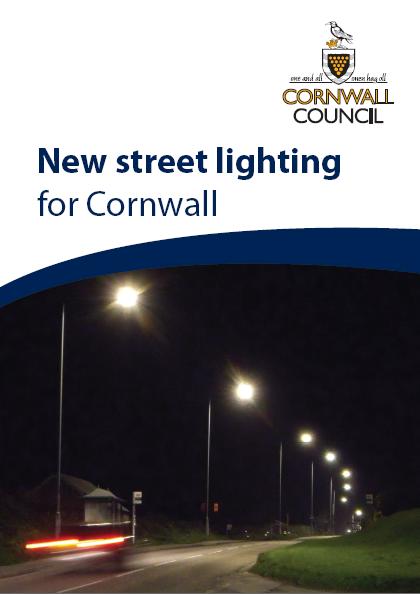 We are working in collaboration with Cornwall County Council to test the effect of new lighting technologies on bats in areas with established street lights.
Cornwall County Council have conducted a pioneering "Invest to Save Project" which aims to replace all Cornwall street lights with
new white spectrum reduced wattage
We are working in collaboration with Cornwall County Council to test the effect of new lighting technologies on bats in areas with established street lights.
Cornwall County Council have conducted a pioneering "Invest to Save Project" which aims to replace all Cornwall street lights with
new white spectrum reduced wattage